

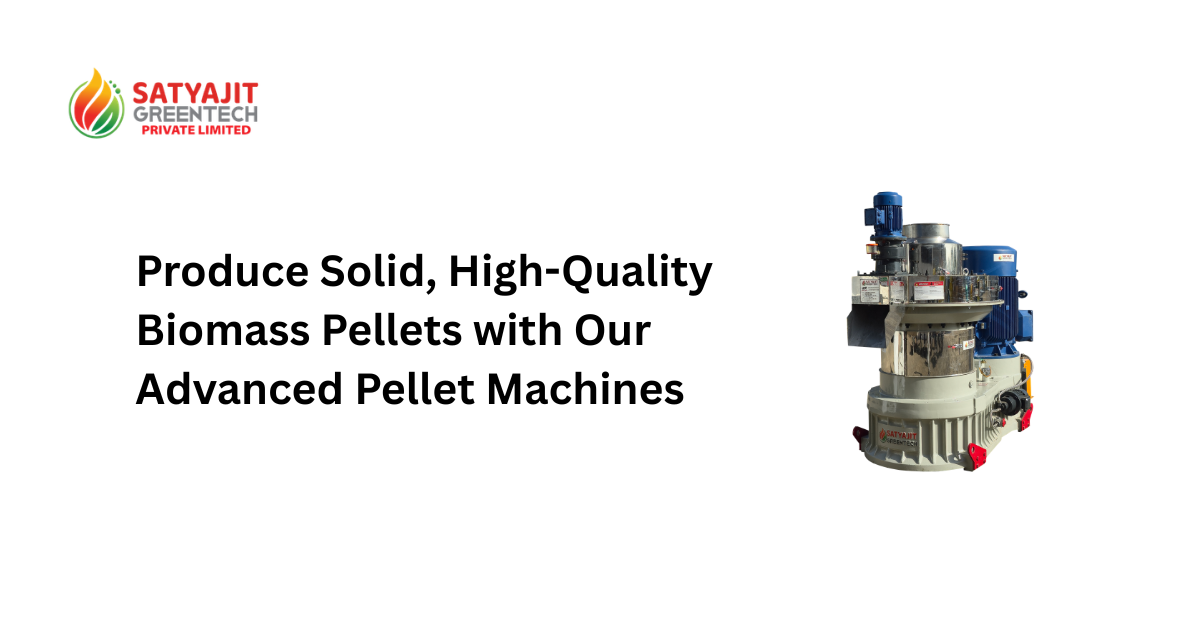
Have you ever questioned why some biomass pellets burn cleaner and last longer than others? Let us give you a brief explanation. It is all about quality and the technology used to produce biomass pellets. We live in an era where the production of renewable energy is essential. We understand that industries seek fuel options that are efficient, sustainable, and eco-friendly.
However, it is not easy to manufacture pellets that have the necessary characteristics. That is why we need advanced pellet production technology, especially in large-scale EPC Plant Construction projects dedicated to renewable energy solutions.
Why You Need High-Quality Biomass Pellets?
Why You Need High-Quality Biomass Pellets?Strong pellets have a significant impact on the performance and energy production of the industry. Biomass pellets that are dense, uniform, and dry will burn efficiently and produce less ash. This means better performance and lower maintenance costs for industries.
Simple and understandable, isn’t it?
The performance of any industry that uses biomass pellets relies greatly on the quality of the pellets. Weak pellets cause problems such as blockages, inconsistent heating, and higher emissions. Therefore, advanced pellet machines that facilitate pellet production are highly needed. It helps industries and EPC Plant Construction firms develop renewable infrastructure.
How Are Solid Pellets Produced?
Manufacturing strong biomass pellets consists of several stages. First of all, raw materials, such as agricultural waste, sawdust, and wood chips, should be collected. They will then be crushed by a hammer mill in order to obtain uniform particles.
The next stage is the reduction of moisture. The material must be dried until its moisture content reaches 8%–12%. Excess moisture makes pellets weak. In case of dryness, the pellets will fail to bind properly.
When the required moisture content is achieved, it is time to feed it into the pellet machine. This machine is equipped with high pressure and temperature that press pellets through a die. This process triggers the formation of natural lignin, a binding agent of biomass pellets.
Finally, the manufactured pellets are cooled, sorted, and packed for shipment or storage.
If you wonder what difference moisture content and compression pressure make, it directly affects pellet density, strength, and burning efficiency.
Features of Modern Biomass Pellet Machines
Advanced biomass pellet machines are equipped with various features that facilitate their performance. These features include:
- High-precision ring dies to produce uniformly shaped pellets
- Energy-saving motors in order to lower production costs
- Automatic lubricating systems for increasing machine life expectancy
- Control panels to monitor the temperature and feeding rates of the pellet machine
- Robust construction suitable for long-lasting use in any industry
Advantages of Investing in Advanced Pellet Machines
Investing in biomass pellet machines allows businesses to increase productivity and minimise wastage. You will be able to convert agricultural and forestry waste into an energy source with advanced pellet machines.
We know how important it is to increase efficiency and reduce costs for businesses. By utilising advanced biomass machines, you will be able to do both.
Moreover, biomass plants constructed as part of an EPC Plant Construction project help industries become energy independent and achieve sustainability goals.
Conclusion
Solid biomass pellets require precise and advanced equipment in order to provide an efficient energy source to industries. Every stage, starting from crushing to compressing, impacts the efficiency of the pellets.
If you wish to boost the renewable capabilities of your industries or construct an EPC Plant, Satyajit Greentech Pvt Ltd provides robust pellet machines suitable for this purpose. Contact our team now!